The dirty tricks campaign which finally gave Hitler control of the army
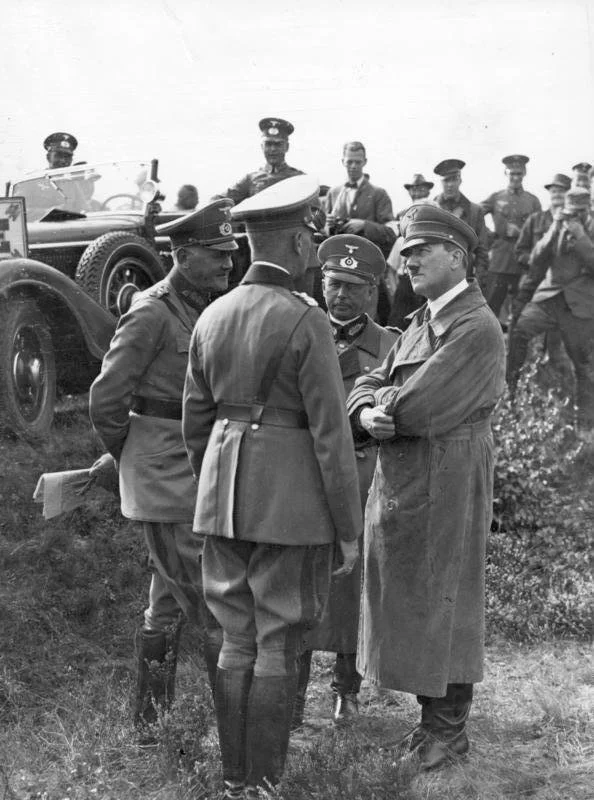
Field Marshal Werner von Blomberg (L) and Colonel General Werner von Fritsch (centre) at military maneouvres with Hitler in 1935
On this day 88 years ago, Hitler took the step which would finally eliminate Germany's army as an institutional obstacle to his plans.
The relationship between the 'Bohemian corporal' and the Prussian elite of the senior officer corps had never been easy.
They were happy to back him as long as they approved of his actions - such as dismembering the SA - but the army threatened to act as a brake on Hitler's aggressive expansionist ambitions.
The Nazis had already taken control of Germany's courts, parliament and civil service. The military was the last bastion of independence.
On January 26, 1938, army commander-in-chief Col General Werner von Fritsch was invited to the Reich Chancellery. Fritsch was an archetypal aristocrat, one of the 'vons' Hitler so despised.
He was also a model officer and a noted critic of Hitler's "rash" foreign policy.
At the Chancellery, Fritsch was confronted by a Gestapo informer named Otto Schmidt who insisted he had seen Fritsch engaging in homosexual acts at Potsdamer Platz with a rent boy named Bavarian Joe.
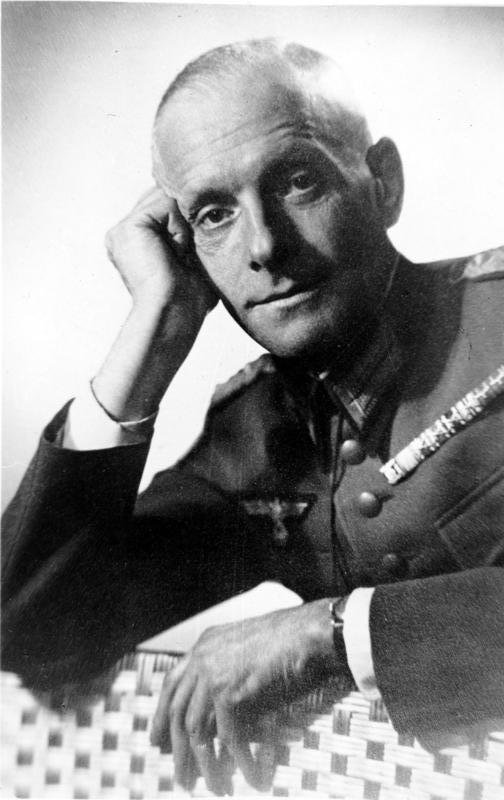
Hans Oster was disgusted at what the Nazis had done to his old commanding officer Col General Fritsch
Fritsch furiously denied the allegation, but Hitler sacked him anyway, despite knowing it was false.
Fritsch had caught an officer in flagranti like that two years beforehand, but it was a completely different man named Frisch. The file had been altered slightly by the Gestapo and Schmidt, a convicted extortionist and male prostitute himself, was easily persuaded to take part in the charade.
The orchestrated incident left the army rudderless as Hitler prepared to invade Austria and Czechoslovakia. It came days after Hitler had also forced out the War Minister, Field Marshal Blomberg, because his new wife had previously posed for pornographic pictures.
Within a week, Hitler had abolished the War Ministry and made himself supreme commander of the armed forces.
Fritsch was later cleared of the false allegations by a military court, but by then it was too late.
He died during the campaign in Poland after ignoring warnings to take cover and exposing himself to sniper fire, widely viewed as an attempt to reassert his honour.
Fritsch had been a close friend of Colonel Hans Oster, the quartermaster of the German Resistance, and the incident deepened his hatred of the Nazis and his determination to overthrow them.
